Can Construction Materials Be Recycled in Idaho?
Short answer: yes, a lot of it can. And recycling construction materials in the Boise area often costs less than landfill disposal.
The EPA estimates that construction and demolition debris makes up about 25-30% of the waste stream in the United States. Much of that could be recycled or reused instead of buried in landfills.
Here's what can actually be recycled from construction projects in the Treasure Valley, where to take it, and why it often makes financial sense.
Concrete and Masonry
This is the easiest win. Clean concrete, brick, and block are highly recyclable and often cheaper to recycle than to landfill.
What happens to it: Concrete gets crushed into aggregate that's used for road base, fill, and new concrete production. Brick and block follow similar paths.
Requirements: Must be clean-no rebar sticking out (or rebar must be minimal), no attached wood, no significant contamination with other materials.
Where to take it: Several facilities in the Boise area accept clean concrete for recycling. Prices are typically lower than landfill rates.
Cost benefit: Recycling concrete usually costs less per ton than landfill disposal. For a driveway demolition generating 10-20 tons, that adds up to real savings.
Scrap Metals
Metal is where recycling can actually make you money instead of costing you money.
Copper: The most valuable. Copper pipes, wiring, and tubing from plumbing and electrical work bring a solid per-pound rate depending on current market prices.
Aluminum: Gutters, siding, window frames, and HVAC ductwork. Solid per-pound value, less than copper but still worthwhile.
Steel and iron: Rebar, structural steel, appliances, and miscellaneous metal. Lower value per pound but usually available in larger quantities.
Where to take it: Scrap yards throughout the Treasure Valley buy construction metals. Pacific Steel, Schnitzer Steel, and others operate in the Boise area.
Tip: Separate different metals before taking them in. Mixed loads get the lowest price. Sorted metals get higher prices for each type.
Wood and Lumber
Wood recycling options are more limited in Idaho than in some states, but they exist.
Clean, untreated wood: Can be chipped for mulch, used as biomass fuel, or processed into engineered wood products. Some facilities accept it, though options vary.
Painted or treated wood: Much harder to recycle. Most painted wood ends up in landfills. Pressure-treated wood has specific disposal requirements due to the chemicals involved.
Reusable lumber: Good-condition dimensional lumber, especially older growth wood, has value to salvage operations and individuals. Habitat for Humanity ReStores sometimes accept usable lumber.
Reality check: Most construction wood ends up mixed with other debris and goes to landfill. Recycling wood requires separation on-site, which many projects don't do.
Other Recyclable Construction Materials
The key is separation. Mixed debris is hard to recycle. Separated materials have more options.
What Can't Be Recycled
Some construction materials have no recycling path in the Treasure Valley:
Insulation: Fiberglass, foam, and most other insulation materials go to landfill.
Roofing shingles: While shingle recycling exists in some markets, options in Idaho are limited. Most shingles go to landfill here.
Carpet and vinyl flooring: Recycling programs exist nationally, but local options are scarce.
Mixed debris: When different materials are mixed together, the whole load typically goes to landfill.
Contaminated materials: Anything with asbestos, lead paint, or hazardous chemical contamination requires special disposal, not recycling.
Making Recycling Work on Your Project
The practical reality is that recycling construction materials requires some planning:
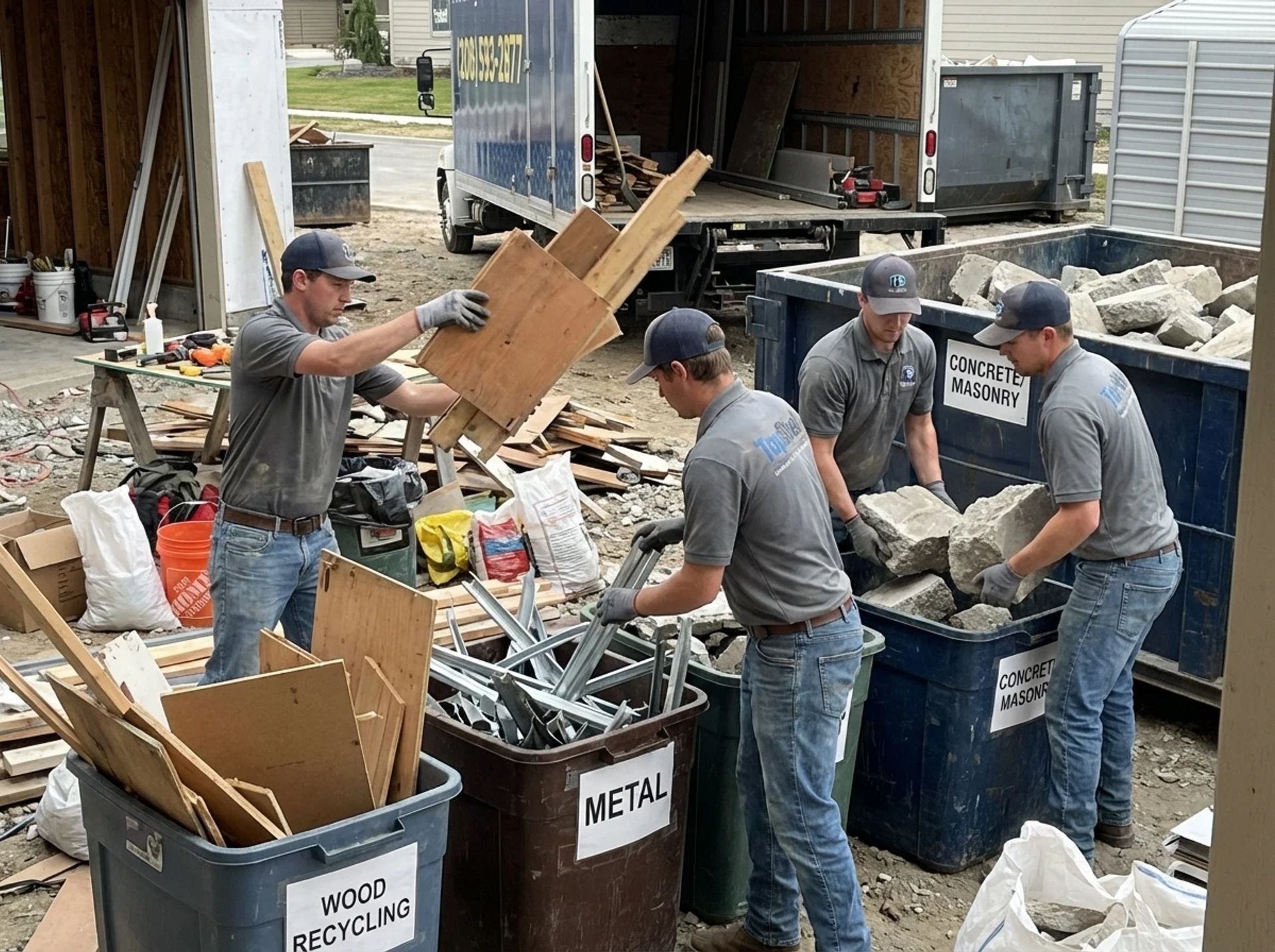
Set up separate containers or piles for materials you plan to recycle. Metal in one spot, clean concrete in another, cardboard somewhere dry.
Train your crew on what goes where. It only works if everyone follows the system.
Have a plan for disposal of each material stream before the project starts. Know where everything is going.
Consider whether it's worth it for your specific project. Small projects may not generate enough recyclable material to justify the effort. Larger projects often see real cost savings.
The Bottom Line
Construction material recycling in Idaho is possible and often cost-effective, especially for concrete, metals, and asphalt. The options aren't as robust as some states, but they exist.
The biggest barrier is usually logistics-separating materials on-site and getting them to the right facilities. If you're working with a debris removal service, ask about their recycling practices. Some sort materials and recycle what they can. Others take everything to the landfill.
We try to divert recyclable materials from the landfill whenever it makes sense. It's better for the environment and often costs less than pure landfill disposal.
Questions About Construction Debris Disposal?
We can help you figure out what's recyclable on your project and handle the removal. Call for a free estimate.
Call (208) 545-3461