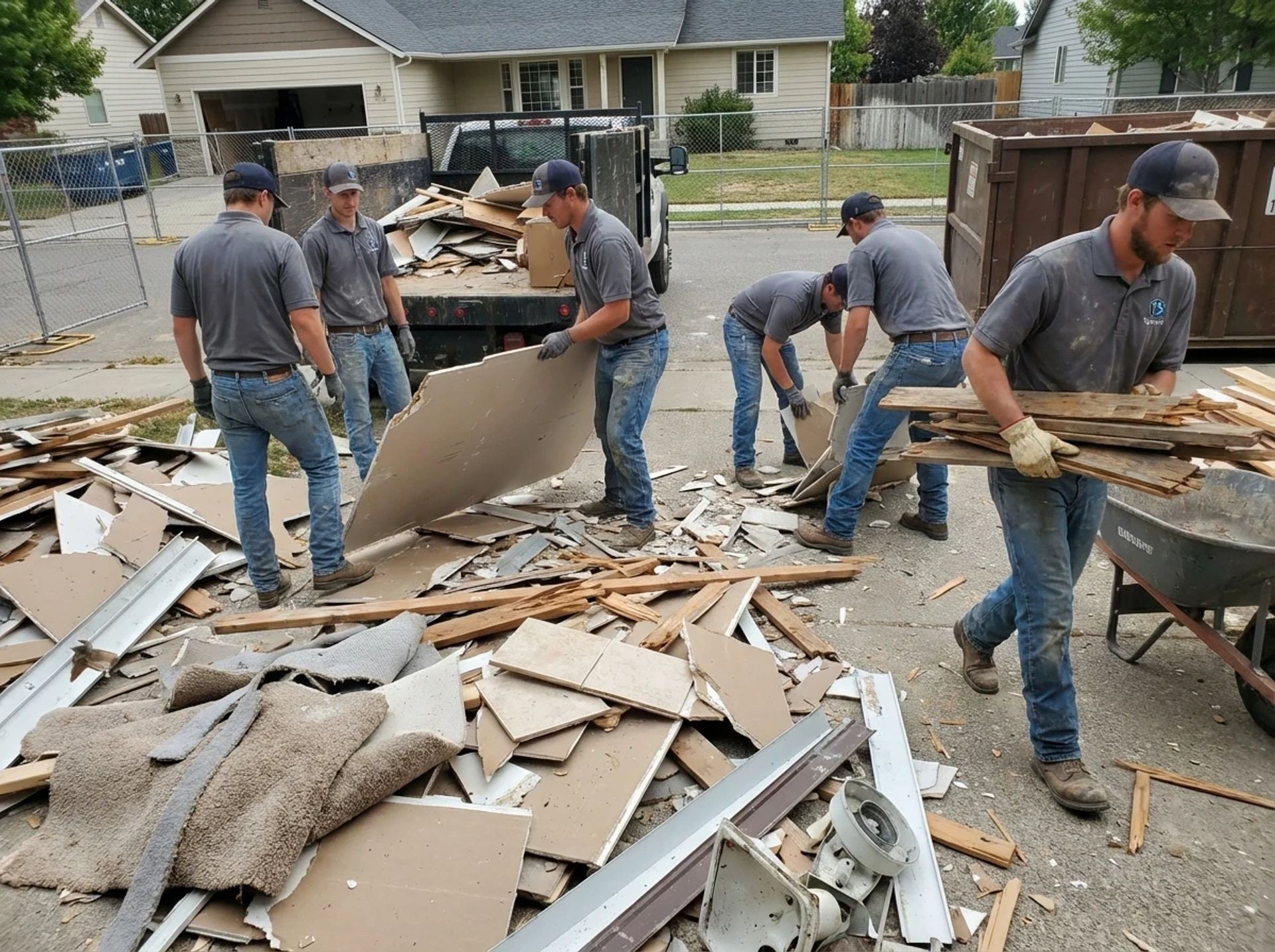
Types of Construction Debris and How Each Is Handled
Not all construction debris is created equal. Different materials have different weights, different disposal requirements, and different costs to remove.
Understanding what you're dealing with helps you estimate removal costs, avoid disposal problems, and potentially save money by recycling materials that have value.
Here's a rundown of the most common types of construction debris we see on Boise-area projects and how each is typically handled.
Concrete, Brick, and Masonry
These are the heavy hitters-literally. Concrete is one of the heaviest construction materials, which affects both how it's handled and what it costs to remove.
Common sources: Driveway and patio demolition, foundation removal, retaining walls, brick facades, block walls.
Weight factor: Concrete weighs about 150 pounds per cubic foot. A 4-inch thick, 10x10 patio slab weighs over a ton.
Disposal: Clean concrete (no rebar or minimal rebar) is often recyclable. It gets crushed into aggregate for road base and fill. Recycling is typically cheaper than landfill disposal.
Cost impact: Because of the weight, concrete removal is priced by weight or with specific pricing. Don't be surprised when a small pile of concrete costs more than a larger pile of lighter materials.
Wood and Lumber
Wood is bulky but relatively light, which means it takes up truck space without adding as much weight as masonry.
Common sources: Framing demolition, deck removal, fence teardown, cabinet removal, trim and molding.
Types matter: Clean, untreated wood has some recycling potential. Painted wood and pressure-treated lumber have more limited options. Most ends up in landfill.
Hazard consideration: Old painted wood may contain lead paint if from pre-1978 structures. This doesn't change disposal much in most cases, but be aware of it.
Cost factor: Wood is priced more by volume than weight since it fills space quickly. A truckload of wood debris weighs much less than a truckload of concrete.
Drywall and Plaster
Drywall (also called sheetrock or gypsum board) is common in almost every interior demolition or renovation.
Common sources: Wall removal, ceiling demolition, water-damaged areas, renovation remodeling.
Disposal considerations: Clean, unpainted new drywall scraps can sometimes be recycled. Painted, textured, or damaged drywall typically goes to landfill. Old plaster (from pre-1950s homes) may contain asbestos and requires testing.
Weight vs. volume: Drywall is moderately heavy-heavier than wood but lighter than masonry. It's also fragile and breaks into pieces that don't stack efficiently.
Dust factor: Drywall creates significant dust during demolition and handling. This affects cleanup and can be a concern for occupied buildings.
Roofing Materials
Roofing debris from tear-offs is heavy, bulky, and has specific disposal requirements.
Roofing tear-offs generate a lot of debris quickly. Most roofers handle their own debris removal, but we also work with contractors who need additional support.
Metals
Metal is the one category where recycling isn't just cheaper-it can actually put money in your pocket.
Common sources: Plumbing (copper pipes), electrical (copper wire), HVAC (aluminum and steel), structural steel, rebar, metal framing, appliances.
Value varies: Copper is most valuable per pound. Aluminum brings decent money. Steel and iron are lower value but still worth recycling.
Separation matters: Sorted metals bring better prices than mixed loads. It's worth separating copper from steel from aluminum if you have significant quantities.
Our approach: We pull recyclable metals from debris loads when feasible. This offsets disposal costs and keeps valuable materials out of the landfill.
Flooring Materials
Flooring removal generates significant debris, and the type of flooring determines disposal options.
Carpet: Bulky and heavy when rolled up. Recycling programs exist nationally but are limited locally. Most goes to landfill.
Vinyl and linoleum: Goes to landfill. Old vinyl (pre-1980s) may contain asbestos-get it tested if unsure.
Tile: Ceramic and porcelain tile goes to landfill unless clean and sorted. The mortar or thinset attached makes recycling difficult.
Hardwood: Good-condition hardwood flooring has salvage value. Damaged or worn hardwood goes with regular wood debris.
Subfloor: Plywood and OSB subfloor goes with wood waste. Concrete subfloors follow masonry disposal paths.
Hazardous Materials to Watch For
Some materials can't go in regular construction debris loads and require special handling:
Asbestos: Found in old insulation, floor tiles, roofing, and siding from certain eras. Must be tested, contained, and disposed of by licensed specialists.
Lead paint: Common in pre-1978 buildings. Painted surfaces may require special handling depending on conditions and regulations.
Chemicals: Old paint cans, solvents, adhesives, and other chemicals found during renovation are hazardous waste, not construction debris.
If you encounter or suspect hazardous materials in your Treasure Valley project, address them properly before proceeding with general debris removal.
The Bottom Line
Construction debris comes in many forms, and understanding what you have affects how it's handled and what it costs to remove.
Heavy materials like concrete cost more to remove. Metals may actually generate value. Some materials require special handling. Mixed loads typically go to landfill.
When you call for a removal estimate, tell us what materials you're dealing with. The more specific you can be, the more accurate our quote will be. And if you're not sure what you have-especially in older Boise homes-we can help you figure it out.
Need Construction Debris Removed?
We handle all types of construction debris throughout Boise, Meridian, Nampa, and the Treasure Valley. Call for a free estimate.
Call (208) 545-3461