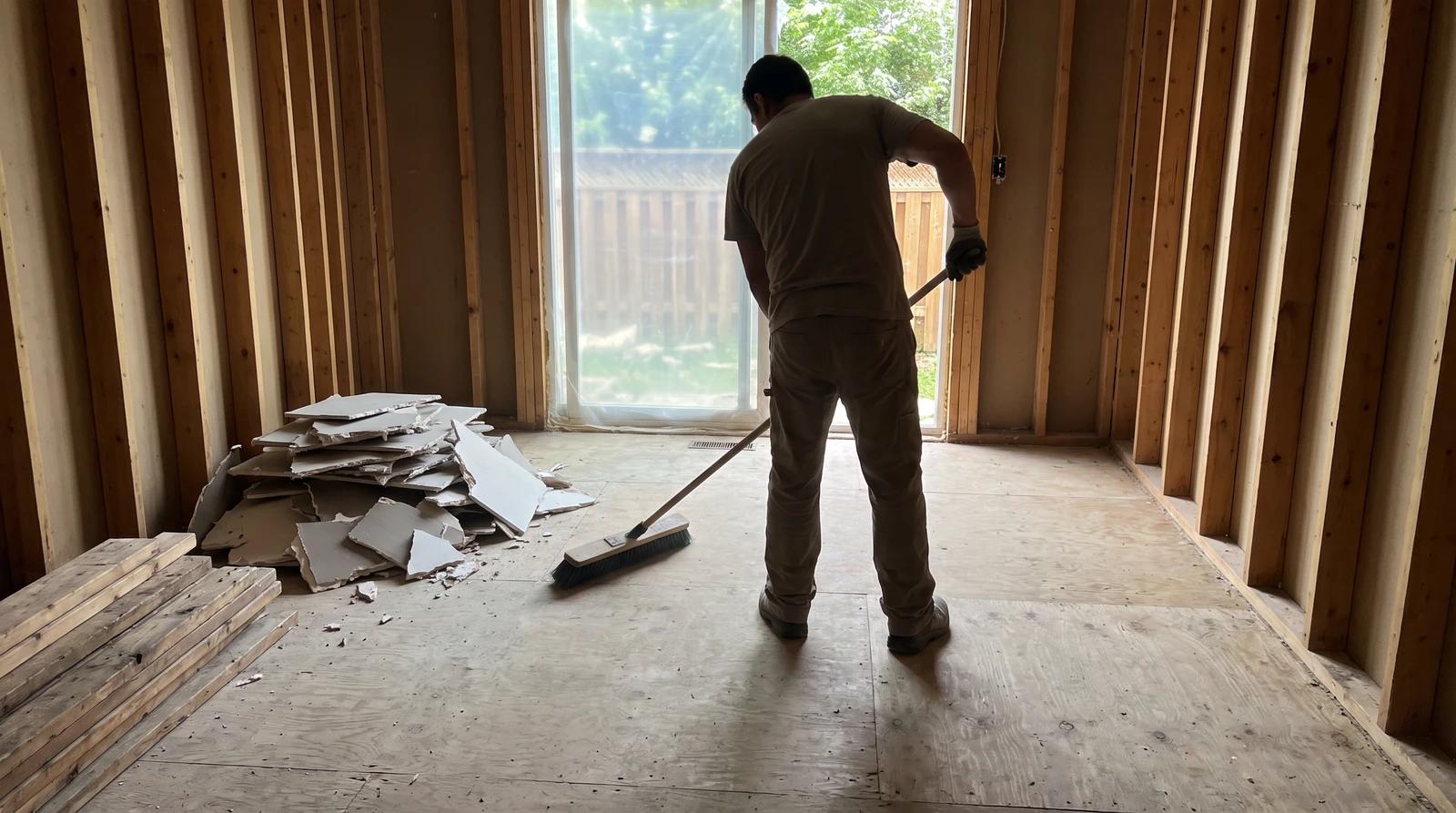
Demolition Cleanup in Boise: Timing Construction Debris Removal
A lot of construction debris removal in Boise starts with a garage that looks like this. Half a kitchen is in there. Cabinets, a countertop in two pieces, a heap of drywall, and a path just wide enough to squeeze through sideways.
It's common to tear a kitchen out over a long weekend and plan to call someone once it's all out. Fair enough. The problem comes when the new cabinets show up and there's nowhere to put them.
That's a question we hear a lot about demolition cleanup. When should the haul actually happen: during the demo, right after it, or once the whole project's done? Here's how we look at it after doing this every week around the Treasure Valley.
Demolition cleanup is the part people forget to plan
Most folks plan the tear-out pretty carefully. They know what's coming out and who's swinging the hammer, and maybe they've pulled a permit. The debris? That usually gets figured out later.
But it piles up faster than you'd think. One bathroom gut can eat half a garage, and plaster and tile are heavy enough that you don't want to carry them twice.
Every time you move a pile, you pay for it, in time, in your back, or both. So the goal is pretty simple. Touch the mess as few times as you can.
One haul right after the tear-out
For most smaller jobs, this is the way to go. You gut a bathroom in the North End or a basement in Kuna, keep everything in one spot, and we take it all in one trip once the last wall is open.
It works because demo usually happens in a short burst. A stretch of tearing out, then a pause before the rebuild starts, and that pause is exactly when you want the room cleared.
Pricing follows the volume and the work involved, so one tidy pile by the garage door is easier on your wallet than debris spread through three rooms and a crawlspace.
Tip: Book the cleanup when you schedule the demo, not after. How soon a pickup can happen depends on the calendar and the size of the job, and lining it up early means the space is clear before your new materials arrive.
When a few pickups make more sense
Bigger jobs are a different story. Gutting a whole house in Nampa or redoing the entire interior of a place in Eagle means the debris just keeps coming. Wait until the end and you're living around a growing pile for weeks.
On those, we usually suggest a few trips. The first after the heavy tear-out, maybe another once the framing changes are done, and a last pass for offcuts and packaging.
It helps in tight spots too. Got a townhouse in Garden City with a shared driveway, or an HOA that doesn't love piles out front? Staged pickups keep things clear and keep the neighbors friendly.
Does it cost more? Each trip is priced on what's actually in it, so the total comes down to volume and the work involved. You're mostly trading a bit of extra scheduling for a lot more room to work.
Smaller loads are easier to sort, too. Clean lumber, metal and cabinets that still have some life in them can often be donated or recycled, and that's a lot easier when they aren't buried under busted drywall.
How Boise weather changes construction debris removal
Seasons matter more here than people expect.
In July and August, old lumber and insulation baking in the sun get brittle and dusty, and nobody in the valley needs a pile of dry scrap sitting next to a dry yard. In spring, a couple of rainy days turn a drywall pile into a soggy, heavy mess that's harder to load and harder to recycle.
Winter brings its own trouble. Debris left outside freezes to the ground and to itself, and breaking loose a frozen heap of plaster takes a lot longer than loading a dry one. If you're demoing between November and February, we'd lean toward hauling it right away.
Permits can move your construction debris removal date
If you're taking down a whole structure, like an old shed, a detached garage or a full teardown, there's a good chance you'll need a demolition permit. Boise, Meridian and Canyon County cities like Caldwell each handle it a little differently.
Why does that matter for cleanup? Because a permit can push your demo date around, and the haul has to move with it. A pickup booked for a set demo date can end up waiting on paperwork.
So get the permit sorted, set the demo date, then lock in the pickup. Not sure if you need one? Call your city's building department before you start, because a short call now can save you a real headache later.
The bottom line: for a small demo, plan one haul right when the tear-out wraps up. For a big remodel, split it into a few pickups so the mess never gets ahead of you. Either way, book the cleanup when you book the demo, not after the garage is full.
Yes, we'd love to be the crew that hauls it off. But if you're just trying to sort out the timing, we're happy to talk it through anyway. Give us a call at (208) 545-3461 and we'll swing by and take a look.
Need Construction Debris Removed?
We handle construction debris removal throughout Boise, Meridian, Nampa, and the Treasure Valley-including proper disposal and compliance with local regulations.
Call (208) 545-3461More From Our Blog
Boise Construction Debris Removal: Staging Your DIY Remodel Mess
Doing your own remodel in Boise? How to pile, sort and protect drywall, lumber and tile debris so pickup goes faster and nothing turns into a bigger problem.
Boise Demolition Cleanup and Construction Debris Removal
Older Boise homes can hide asbestos and lead paint. Here's what to check before demolition cleanup so your construction debris removal stays simple.
Construction Debris Removal in Boise: Waste Disposal Cost
What sets construction waste disposal cost in Boise: volume, weight, access and timing. A local debris removal crew explains how a firm quote gets built.
