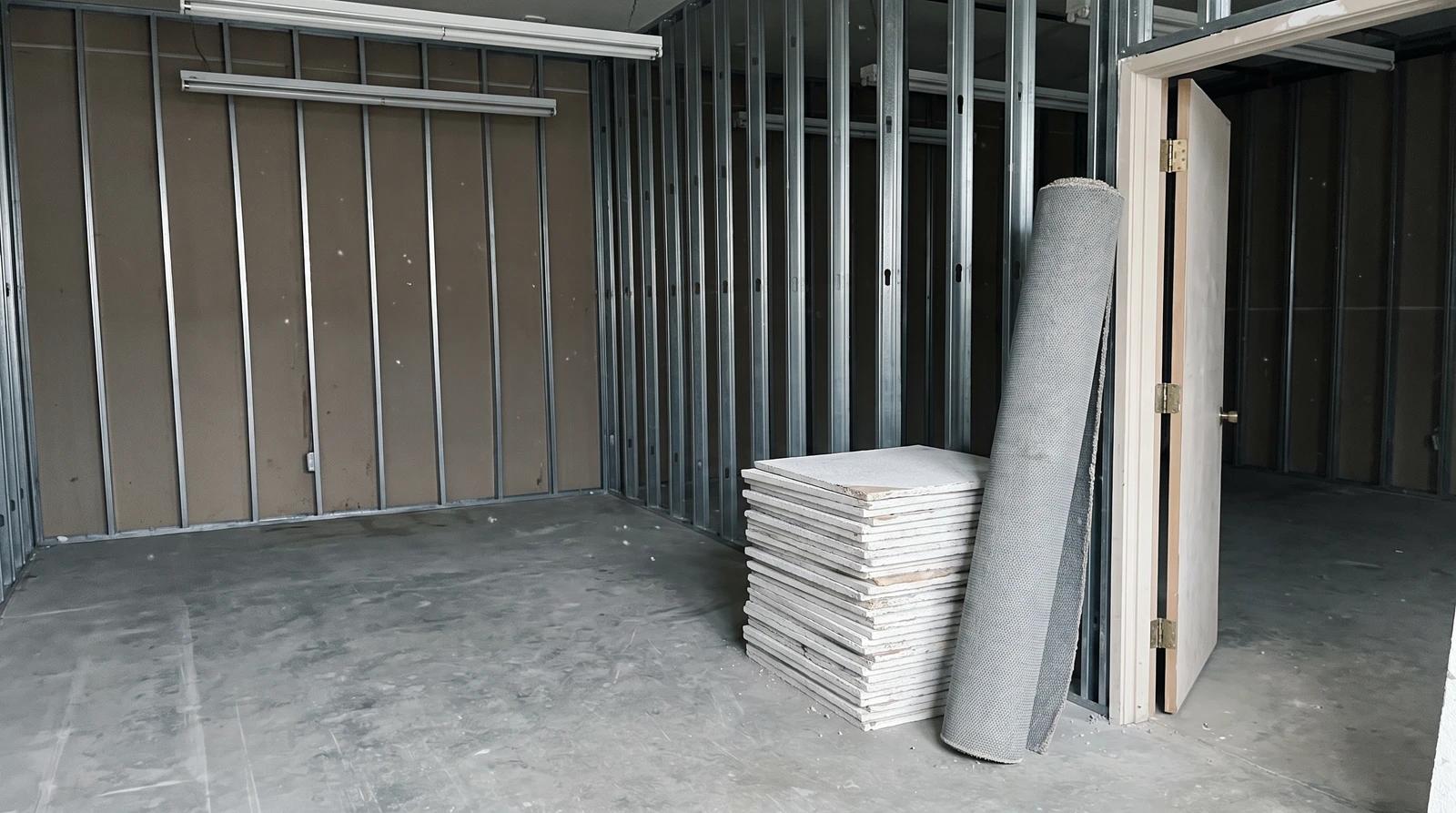
Construction Debris Removal Boise: Tenant Improvement Prep
You've just signed the lease on a suite in a strip center off Eagle Road, or maybe you manage one. Before the new buildout can start, the last tenant's walls, carpet and drop ceiling all have to come out. That first step is where construction debris removal in Boise gets more complicated on a commercial job than on a home remodel.
It's not harder, exactly. More people just get a say in how it happens.
A house has one owner. A commercial building has a landlord and a property manager. It has neighbors on both sides who are still open for business, and sometimes building rules nobody mentions until the crew is standing at the door.
So here's what to sort out before anything gets torn out.
What tenant improvement debris actually looks like
Tenant improvement work, usually just called a TI, leaves behind a pretty predictable mix. You'll see metal studs and track, drywall, carpet tiles or glued-down carpet, and ceiling grid with acoustic tiles.
Then there's the stuff people forget about. Old reception counters, break room cabinets, light fixtures, and a lot more low-voltage cable coming out of the ceiling than you'd expect.
Most of it is bulky rather than heavy. Ceiling tiles and carpet take up a lot of room for what they weigh. That matters, because pricing is based on the space and the work involved, not a flat rate per job.
Metal studs and old wiring can often go to scrap recycling instead of the landfill. Office furniture and fixtures in decent shape can sometimes be donated. If you sort those out early, more of the load stays out of the Ada County landfill.
Building rules that shape construction debris removal in Boise
This is the part that catches people off guard. Before you book anyone, call your property manager and ask a few plain questions.
Where can debris be staged? Some centers let you use a rear service door. Others don't want anything sitting outside the suite at all, especially in a shared lot where customers park.
When can the work happen? Office buildings downtown and medical-office complexes out in Meridian often limit noisy work or carry-outs to certain hours so other tenants aren't disrupted. If the building has a freight elevator, you'll usually need to reserve it.
What do they need on paper? Property managers often want proof of insurance from any contractor working in the building. We're licensed and insured. It's a lot easier to get that paperwork over to them ahead of time than to scramble for it the morning of the job.
Heads up: In older commercial buildings, get the ceiling tiles, floor tile and mastic, and drywall joint compound tested for asbestos before anyone pulls them out. Federal rules generally require an asbestos inspection before renovating or demolishing a commercial building, and that inspection has to happen before the debris exists, not after.
Getting the suite ready for construction debris removal
You don't have to do much, but a few things help.
First, clear out anything you're keeping. Sounds obvious, right? But in an empty suite, the old tenant's leftovers and the new tenant's early deliveries start to blur together fast. Move your things out, or tape them off and tell the crew.
Set aside anything that isn't construction debris, too. Paint, solvents and old fluorescent tubes may need their own handling. And if the space used to be a medical or dental office, anything that counts as medical or regulated waste has to be dealt with separately. We don't haul it, and anyone clearing out ordinary buildout debris shouldn't either.
Access makes a real difference. A ground-floor suite with a back door near the loading area is about as easy as it gets. A second-floor office with one small elevator and a long hallway means more time and more trips, and you'll see that in the estimate.
Timing it around the rest of the buildout
Commercial jobs run on a schedule, and debris removal is usually the first domino. Framers, electricians and flooring crews can't start until the old stuff is gone.
Season plays a part. Summer is busy across the Treasure Valley, with remodels, cleanouts and new construction all competing for crews. Winter brings icy lots and early dark, and carrying debris across a frozen parking lot just goes slower.
Where you are matters a little too. If your project is in Nampa, Caldwell or elsewhere in Canyon County, the debris goes to a different landfill than it would from Boise, Garden City or Eagle. Each county sets its own rules on what it'll accept.
So when should you call? Earlier than you think. Same-day service is sometimes possible, and it doesn't cost extra when it is. But when you're working around building rules and a contractor's start date, a little lead time makes everything easier to line up.
A few calls before the buildout calendar fills up
Most of the headaches on a TI job trace back to the same few things. The property manager wasn't asked about staging or hours. Older materials didn't get tested. Nobody marked what was staying.
If you handle those first and plan the haul before the buildout crews are scheduled, the rest tends to go smoothly.
Yes, we'd love the work. But honestly, those steps will save you trouble even if you hire someone else. Much of what we haul ends up recycled or donated, and we take cash, card and Venmo.
If you've got a suite in Boise, Meridian, Nampa or anywhere else in the Treasure Valley that needs clearing, give us a call at (208) 545-3461. We'll come out for a free look and give you a firm price before anything gets touched.
Need Construction Debris Removed?
We handle construction debris removal throughout Boise, Meridian, Nampa, and the Treasure Valley-including proper disposal and compliance with local regulations.
Call (208) 545-3461More From Our Blog
Construction Debris Removal Boise: Window Remodel Haul Away
Replacing windows in Boise? How to handle old frames, broken glass and lead-painted sashes, where it can go in the Treasure Valley, and when to get it hauled.
Tile and Plaster Construction Debris Removal in Boise
Tearing out tile, mortar beds or old plaster in Boise? Here's why that debris is heavier than it looks, how to prep it, and what drives the cost.
Boise Construction Debris Removal: Staging Your DIY Remodel Mess
Doing your own remodel in Boise? How to pile, sort and protect drywall, lumber and tile debris so pickup goes faster and nothing turns into a bigger problem.
